
Why Every Small Business Chatbot Rollout Since 2023 Has Underdelivered
Small business chatbot rollouts keep failing. Here's why every deployment since 2023 has underdelivered — and what actually works instead.

Loading articles…
LABARNATHE INTELLIGENCE FIELDLABARNA EDITORIAL INTELLIGENCE / LIVE
How energy teams in Vietnam should evaluate sovereign AI deployment vs. traditional dev shops — a practical methodology for smarter decisions.
READ THE LATEST ARTICLE ↗
Independent briefings on the intelligence, infrastructure and operating systems reshaping how companies build, transact and scale.
Small business chatbot rollouts keep failing. Here's why every deployment since 2023 has underdelivered — and what actually works instead.

Agentic infrastructure deployed under your own domain means owned code, data, and intelligence—not a rented platform. Here's what that actually looks like.

Horizontal SaaS copilots promise everything and deliver averages. Here's when a vertical-specific agent stack wins every time.

The "Copilot for Everything" wave is flooding businesses with AI tools that don't coordinate. Here's what's actually breaking and why.

Salesforce, HubSpot, and Zendesk each pitch their own AI agent — but bundled agents fragment your data and cost more than coordination.

Why generic AI tools fail custom business operations — and which deployment approaches actually match how your business runs.

Generic AI agents fail in specialized industries. Here's why vertical-specific deployment beats one-size-fits-all automation for real business outcomes.

Compare the top AI agent platforms for unified customer memory across sales and support — and why shared context is the real differentiator.

Home-services operators need more than scheduling tools. See which agent systems actually wire dispatch, billing, and retention together.

Should a growing business coordinate AI agents or consolidate them? This guide breaks down every major approach so you can decide with confidence.

SaaS vendors embed AI to lock you in — here's why that guarantees fragmentation and what a coordinated, sovereign stack actually looks like.

Run your own deployment post-mortem using this coordination failure framework — before silent failures compound into real financial damage.

Cyber insurance for SMB agent stacks is complex. Learn which policies actually cover agentic AI deployments and where coverage gaps appear.

Renting AI agents means accepting someone else's data rules. See how major platforms compare—and why ownership changes everything.

Ghost Architecture isolates client data inside owned infrastructure — here's why that structural difference decides SOC 2 outcomes for AI agent deployments.

Most CEOs wouldn't rent their general ledger. So why rent AI agents? A breakdown of the ownership models that define your competitive future.

Sovereign AI reduces GDPR exposure for EU agent deployments by keeping data ownership, processing, and governance inside client infrastructure.

Discover why agent ownership is the most underrated compliance advantage in AI deployment — and how sovereign infrastructure changes everything.

Before buying another AI tool, founders need these diagnostic questions to cut subscription waste and build toward owned, coordinated intelligence.

When agent coordination breaks down, orders disappear. This COO guide ranks the real causes and fixes for multi-agent failures in operations.

Every AI subscription your company signs looks clean on the vendor invoice. The monthly charge is defined, the contract term is set, and the renewal date is.

Compare 30-day agentic AI deployment approaches—from slow consultancies to owned stacks—and find which model actually ships production agents fastest.

Payroll agents that only process payroll miss the broader story. Here's how execution-only agents differ from full coordination systems.

Value Intelligence Protocols do what off-the-shelf automation cannot: coordinate agents, own data, and compound operational intelligence over time.

Discover what Ghost Architecture means in daily operations — client-owned AI, zero vendor dependency, and sovereign infrastructure explained practically.

Small-business AI built on vendor models risks lock-in and generic outputs. Learn why data-first architecture delivers lasting competitive advantage.

REAP is the autonomous payment protocol powering agent-to-agent commerce — here's how each layer of the system actually works.

SLPI explained: how federated pattern intelligence works across agent fleets without centralizing raw data — Labarna AI's sovereign learning system.

ADRE is the Autonomous Dispute Resolution Engine — seven coordinated capabilities that automate evidence, strategy, and filing across three graduated autonomy.

Make.com scales workflows but hits real limits. Coordinated agents go further—here's exactly where each breaks and what fixes it.

Small businesses buying AI tools one by one accumulate subscriptions without gaining real automation. Learn how to diagnose and escape the point-solution trap.

Zapier automates tasks. Coordinated agents execute decisions. This guide shows exactly where workflow automation hits its ceiling—and what replaces it.

Stacking the best AI tool per function creates hidden costs that a single coordinated stack eliminates. Here's what each approach actually costs.

n8n is a powerful workflow tool — but wiring agents through it doesn't make it a coordination layer. Here's what the difference actually means.

Agentic AI coordination for property management: compare deployment approaches for turnover, vendor ops, and owner reporting workflows.

Running a contractor network means operating several distinct businesses simultaneously. There is the sales function that hunts and wins bids, the estimating.
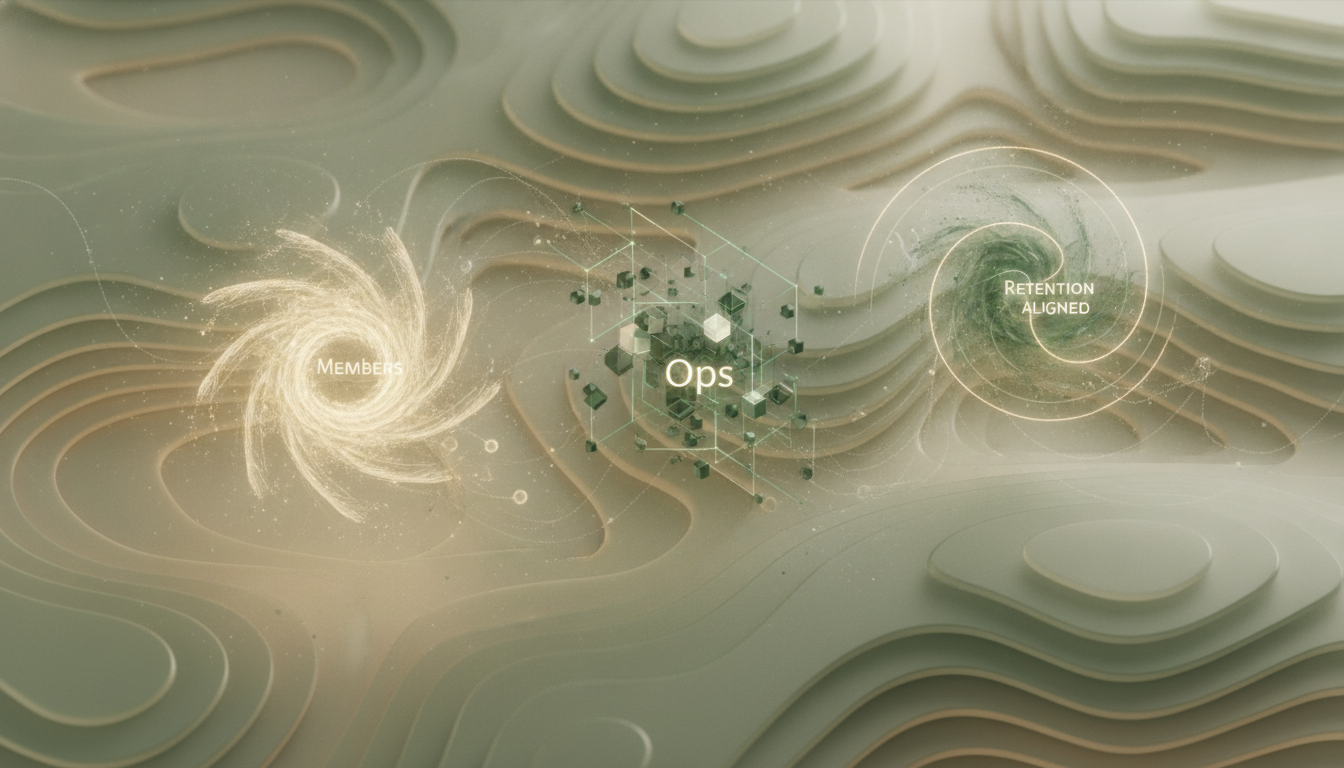
Coordinated agents for fitness and wellness businesses align member management, operations, and retention in one intelligent system.

How logistics SMBs can unite dispatch, fleet, and billing through coordinated AI agents on one fabric — compared and evaluated.

Discover how coordinated AI agents unify grant management, donor relations, and program ops for non-profits in one owned stack.

Discover how coordinated AI agents transform insurance agency operations across underwriting, policy servicing, and renewals workflows.

Compare the top agentic AI approaches for franchise operators managing multi-unit complexity — from royalties to labor, in one coordinated layer.

How coordinated AI agents unify enrollment, retention, and compliance for education providers — and which approaches deliver real results.

Compare top agentic AI systems for professional services time tracking, billing, and client operations coordination in one platform.

Compare AI agent approaches for restaurant group operations — inventory, labor, and POS coordination evaluated across real deployment models.

How coordinated AI agents transform auto dealer group operations across inventory, financing, and customer retention into one unified system.

Compare coordinated AI agent approaches for e-commerce operators managing fulfillment, support, and retention across one connected system.

Compare agentic AI platforms for home services scheduling, dispatch, billing, and retention—and find out which owns its stack.

Compare the top coordinated agent systems for manufacturing SMBs combining ops, quality, and maintenance in one unified stack.

Real estate operations are unusual among asset-intensive industries because three fundamentally different work streams — portfolio performance, lease.

Compare the best coordinated AI agent systems for multifamily property managers covering leasing, maintenance, and renewal workflows in one stack.